
Shooting Totality in the Texas Hill Country: A Field Guide for Europe's Eclipse on August 12th, 2026.
One tripod, a five hour drive, a solar filter stuck somewhere in an Amazon warehouse, and a paper thin gap in the clouds that opened at exactly 1:34pm. Here's exactly how I shot the April 8, 2024 total eclipse in Texas Hill Country, and the lessons I would carry with me if I were in Europe for the total eclipse on August 12th.
One tripod, a five hour drive, a solar filter stuck somewhere in an Amazon warehouse, and a paper thin gap in the clouds that opened at exactly 1:34pm. Here's exactly how I shot the April 8, 2024 total eclipse in Texas Hill Country, and the lessons I would carry with me if I were in Europe for the total eclipse on August 12th.
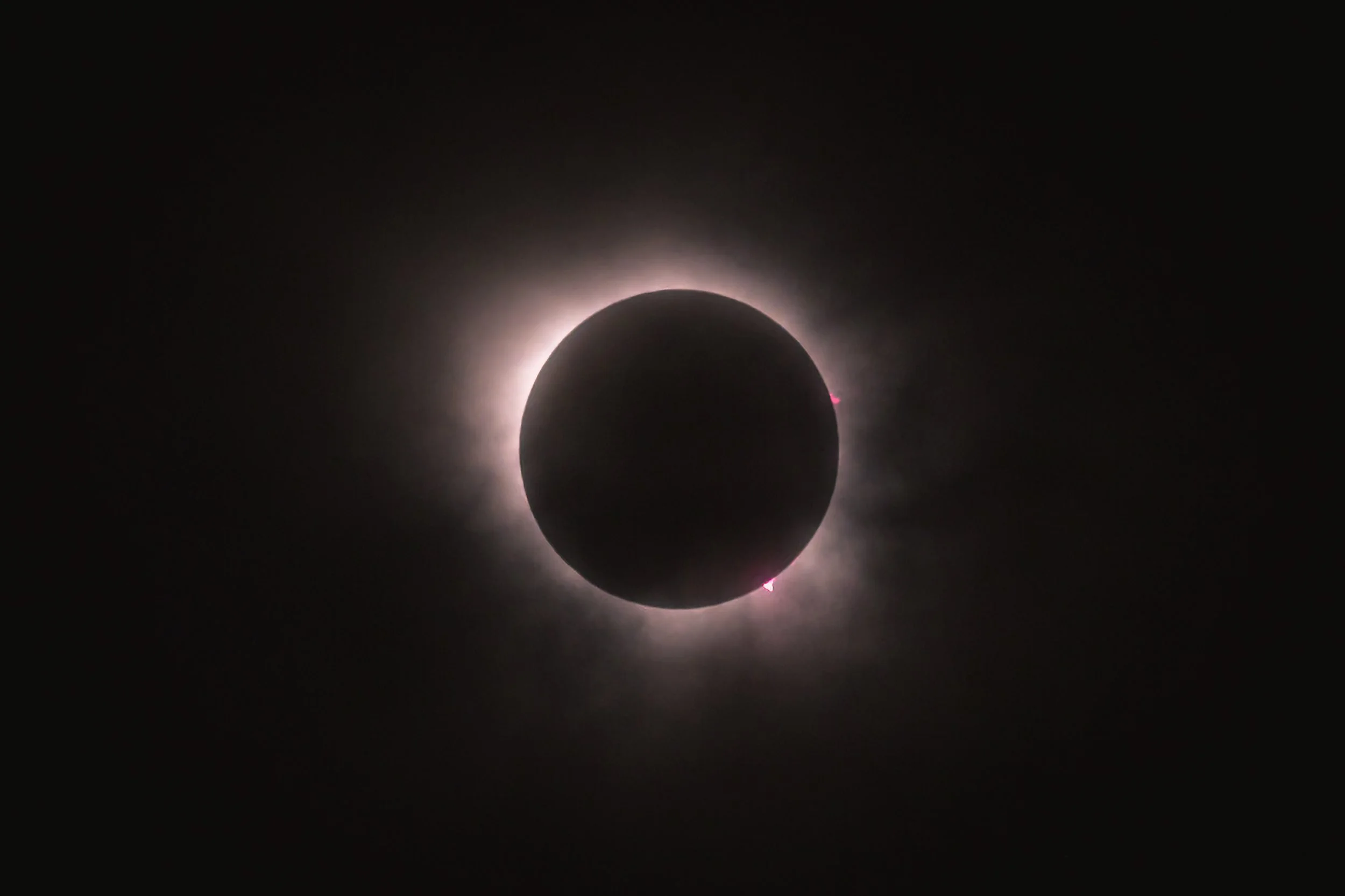
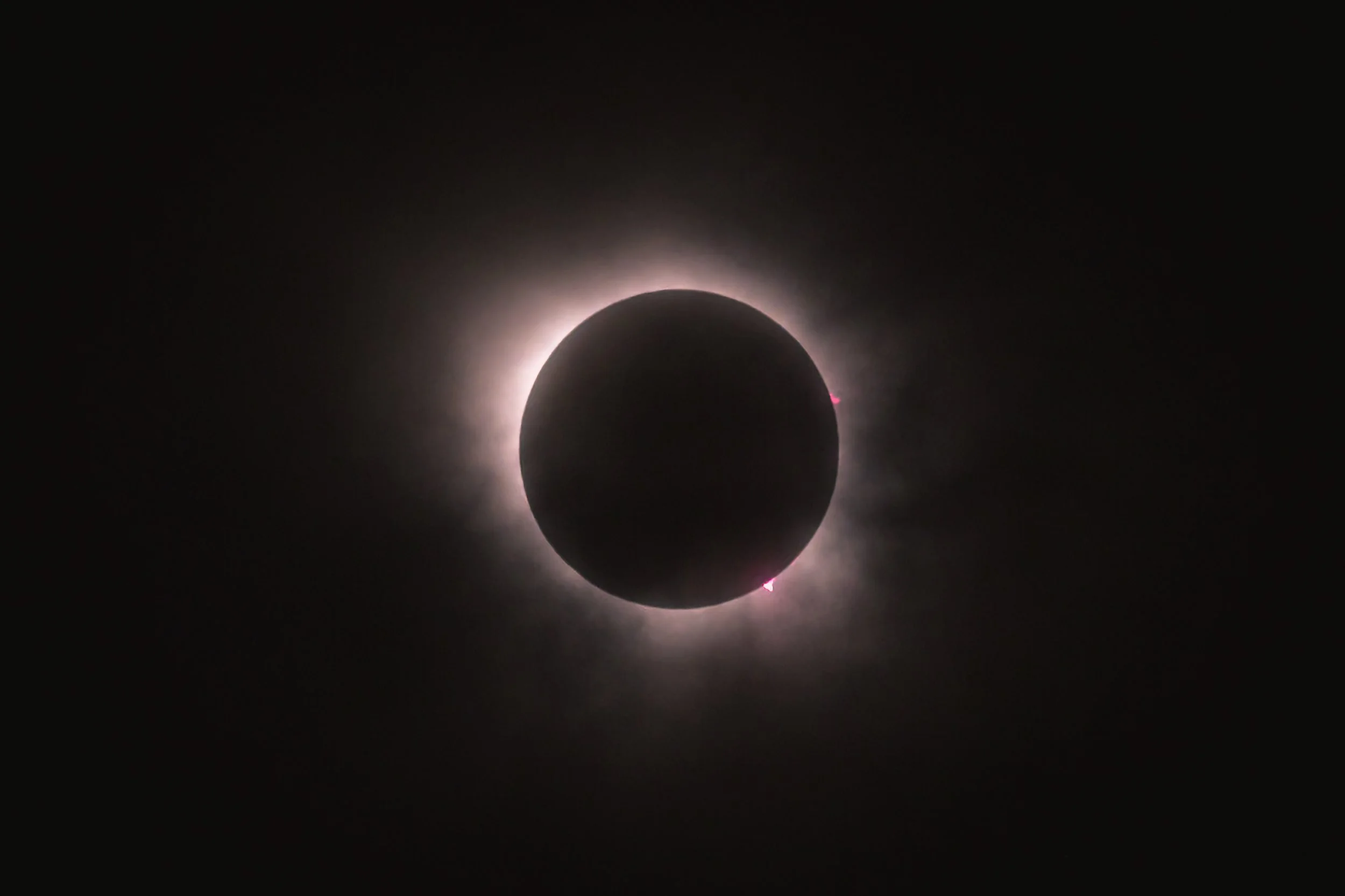
Total Solar Eclipse. Fredericksburg, Texas. 04/08/2024. Shot on Olympus EM1 Mark II & M.Zuiko 40-150mm f 2.8 Pro at 150mm.
How I ended up in Texas Hill Country:
I made the call to chase the eclipse the night before. I had been discouraged by weather reports showing that viewing the eclipse wouldn’t be possible. But I agreed to meet up with a friend. So I woke up and hit the road at 6AM. I drove almost five hours out to a patch of sky just outside Fredericksburg to meet up with my friend Javid and his brother Moosa. Clouds had been rolling through since night before, thickening, thinning, never fully clearing, and there wasn't much to do about it except drive toward totality and hope. We set up in a parking lot with a tripod, one lens, and a lot of time to stare nervously at the sky.
The conditions I actually faced:
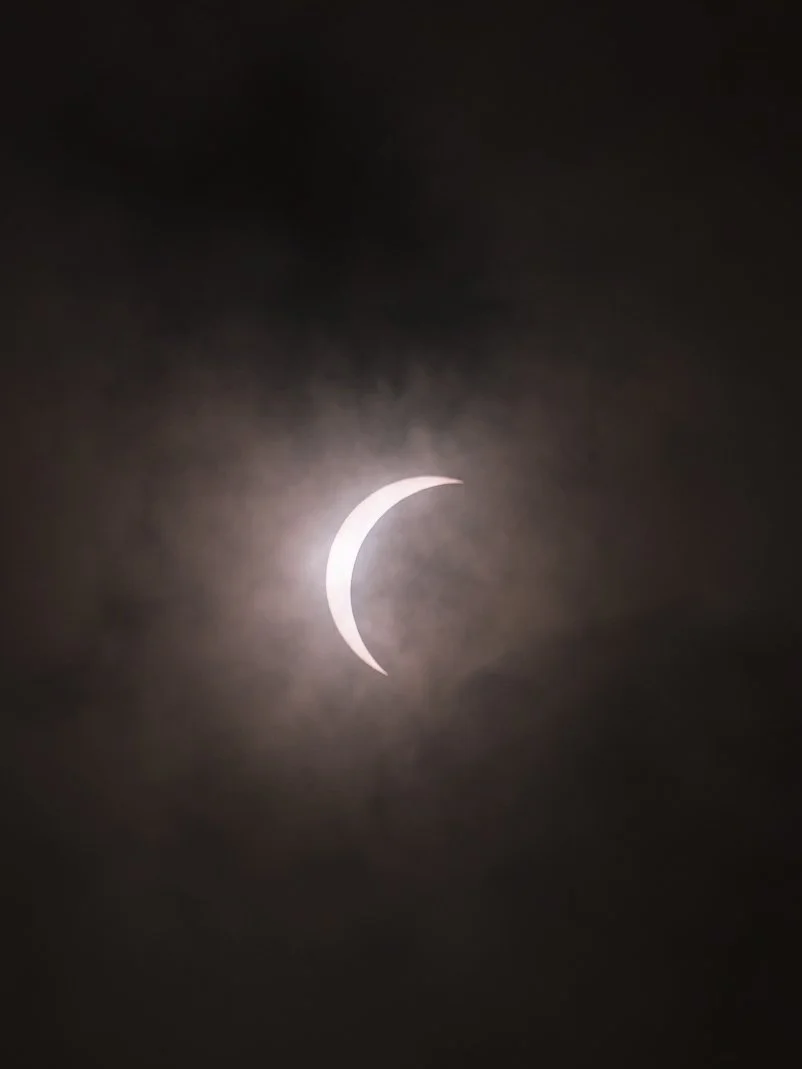
The partial phases crawled by behind a cloud deck that would not commit to anything. Some minutes, it thinned enough to shoot through. Other minutes the sun disappeared completely. By 1:22pm I could barely tell where the sun was behind the haze. Then, right as totality hit, a gap opened. Paper thin. Just enough.
For a little over four minutes, nothing else mattered. Those pink flares peeking out from behind the moon's edge are solar prominences, actual plasma erupting off the sun's surface, and I still do not fully believe I caught them through that much cloud cover.
What was actually in my bag:
Proving that even old dogs can still cut it, I shot this on the (now discontinued) Olympus OM-D E-M1 Mark II paired with the Olympus M. Zuiko 40-150mm f/2.8 PRO, on my Peak Design Travel Tripod the entire time and carried it all in my trusty Peak Design Everyday 30 L backpack. The Olympus camera, and its successor (the OM System OM 1 Mark II), use a Micro Four Thirds sensor, which has a 2x crop factor, so a 150mm lens shoots like 300mm on a full-frame body. I’ll talk about the filters I used below. The other essential item cost five dollars: cheap solar eclipse glasses from Walmart. That's what protected my own eyes during the partial phases, completely separate from whatever filter sat on the lens. Do not be an idiot and stare at the sun, not with sunglasses, not through a viewfinder, not with anything that isn’t a pair of ISO 12312-2 certified eclipse glasses or you're standing inside the brief window of totality itself.
The filter that didn't show up:
In preparation for the possibility of shooting the eclipse, I ordered a K&F Concept 82mm ND1000000 filter off of Amazon. This is a dedicated 20-stop solar ND filter built specifically for shooting the sun and eclipses. Confident in the sanctity of Amazon Prime Delivery benefits, I placed the order on Amazon only 3 days before the eclipse. Delivery was scheduled for the day before the eclipse. Naturally, when the day arrived, I got a notice from Amazon saying my delivery was delayed and would no longer arrive on time for the eclipse. I trusted you Jeff Bezos, I trusted you...
So backed into a corner, I did what I always do… I improvised. I stacked my K&F 10-stop fixed ND with my K&F 1-5 Stop Variable ND on top of it. They’re both 82 mm threads so this made it possible. If it sounds like a workaround worthy of being on the Shittyrigs Instagram page, it’s because it was, and yet it actually turned out to be the better tool for the day. A fixed 20-stop filter gives you one setting. My stack let me twist the variable ND up or down as the clouds thickened and thinned in front of the sun, which was happening every few minutes that afternoon. If the dedicated filter had shown up on time, I might have spent the whole eclipse fighting it instead of adjusting to the sky in real time.
If you are heading to Iceland or Spain, I hope you ordered your solar filter on time, but if you didn’t know your backup options. A stacked ND setup isn't as clean as purpose-built solar glass, and you should never point it at the sun without confirming it's actually dark enough to be safe. If your primary filter is stuck in transit, it's a real option, not just a shrug.
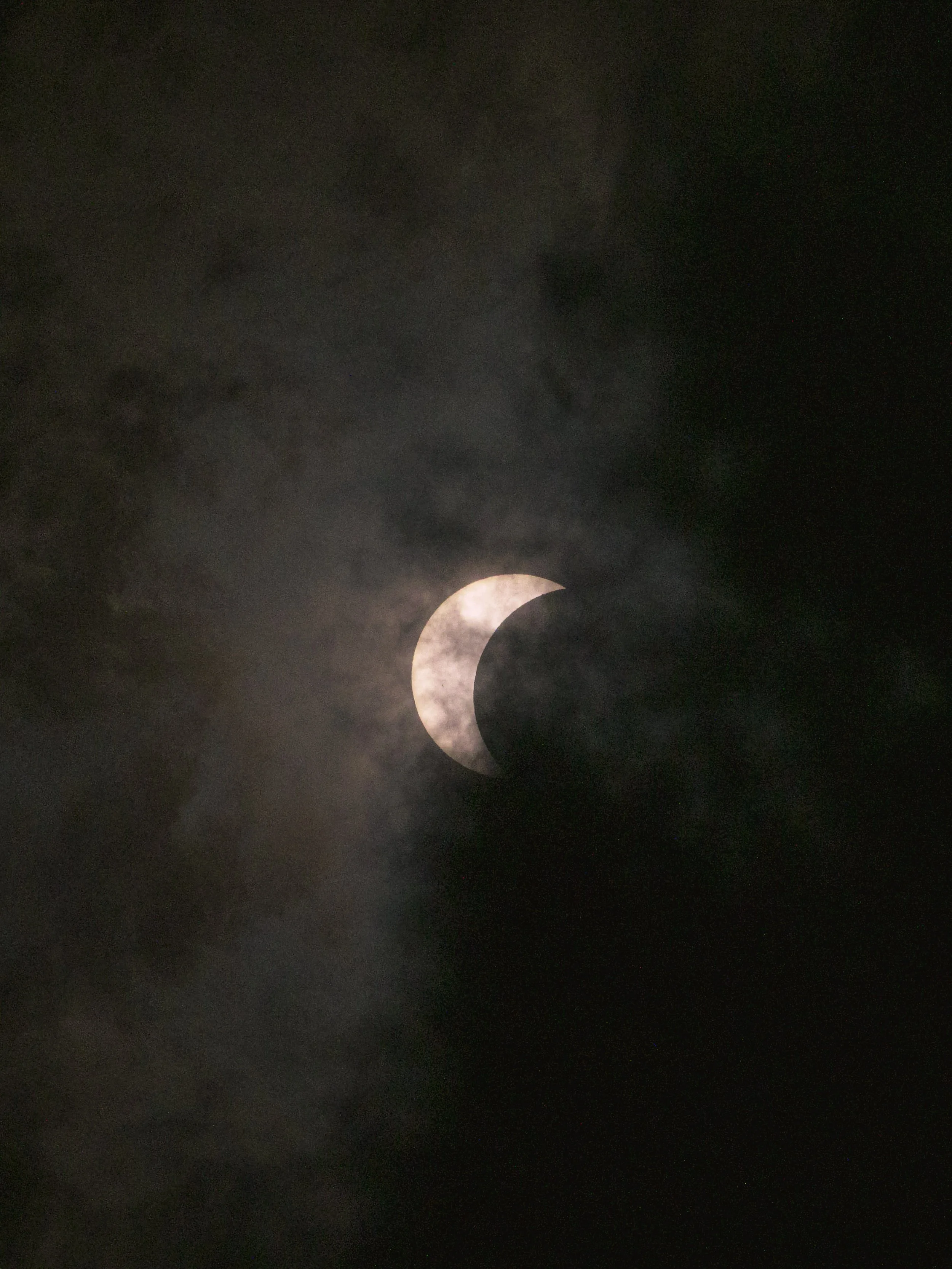
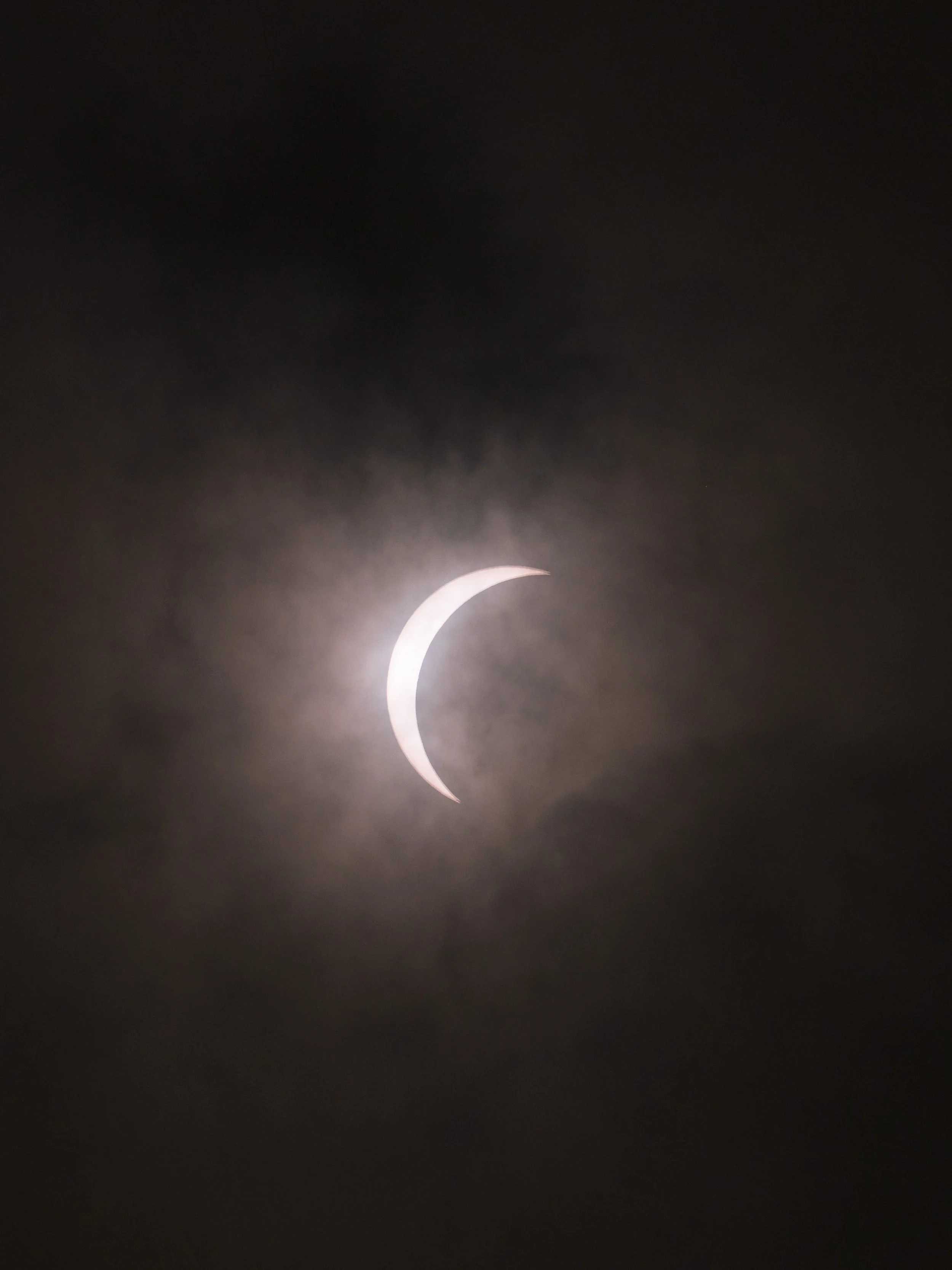
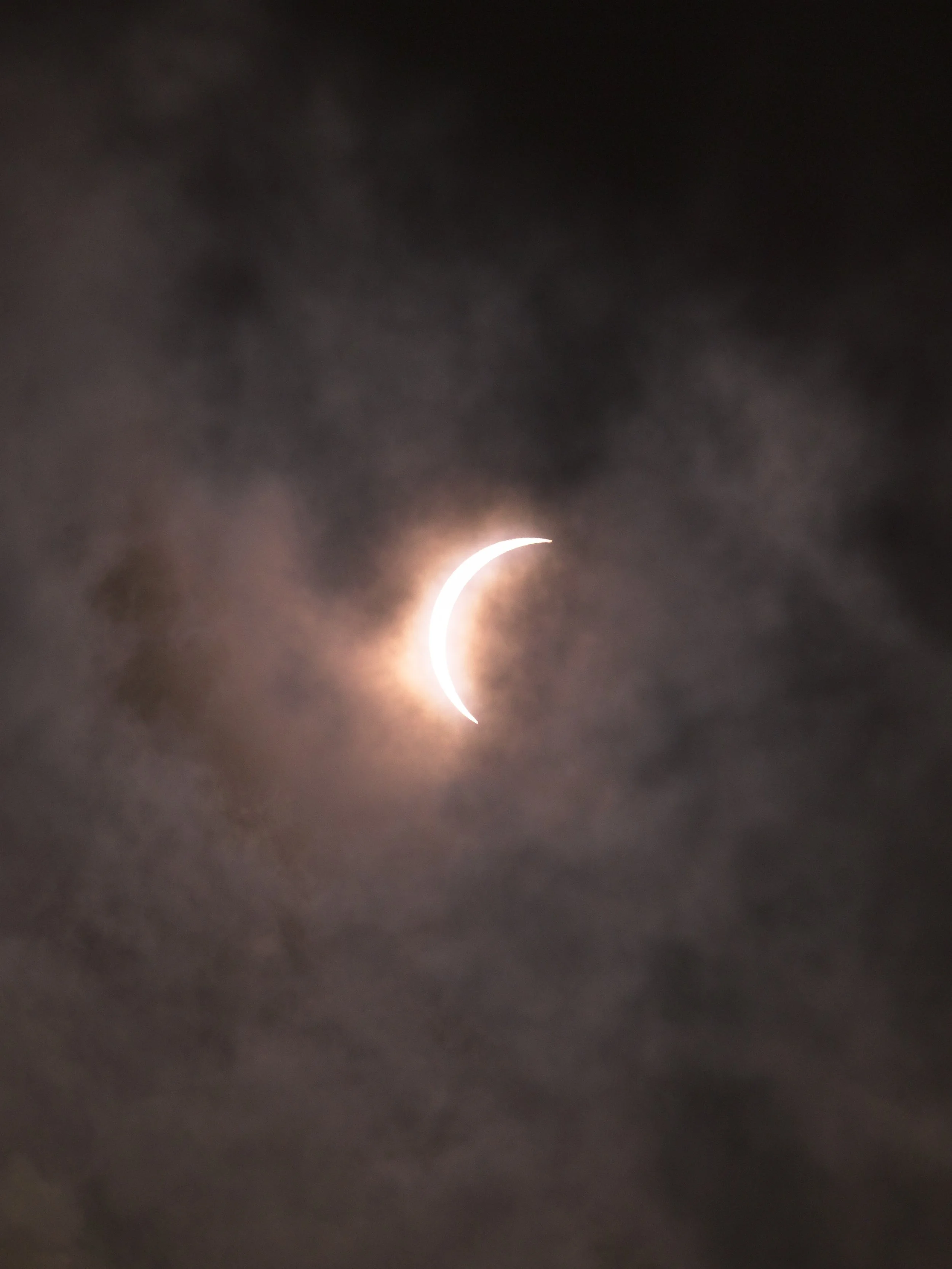
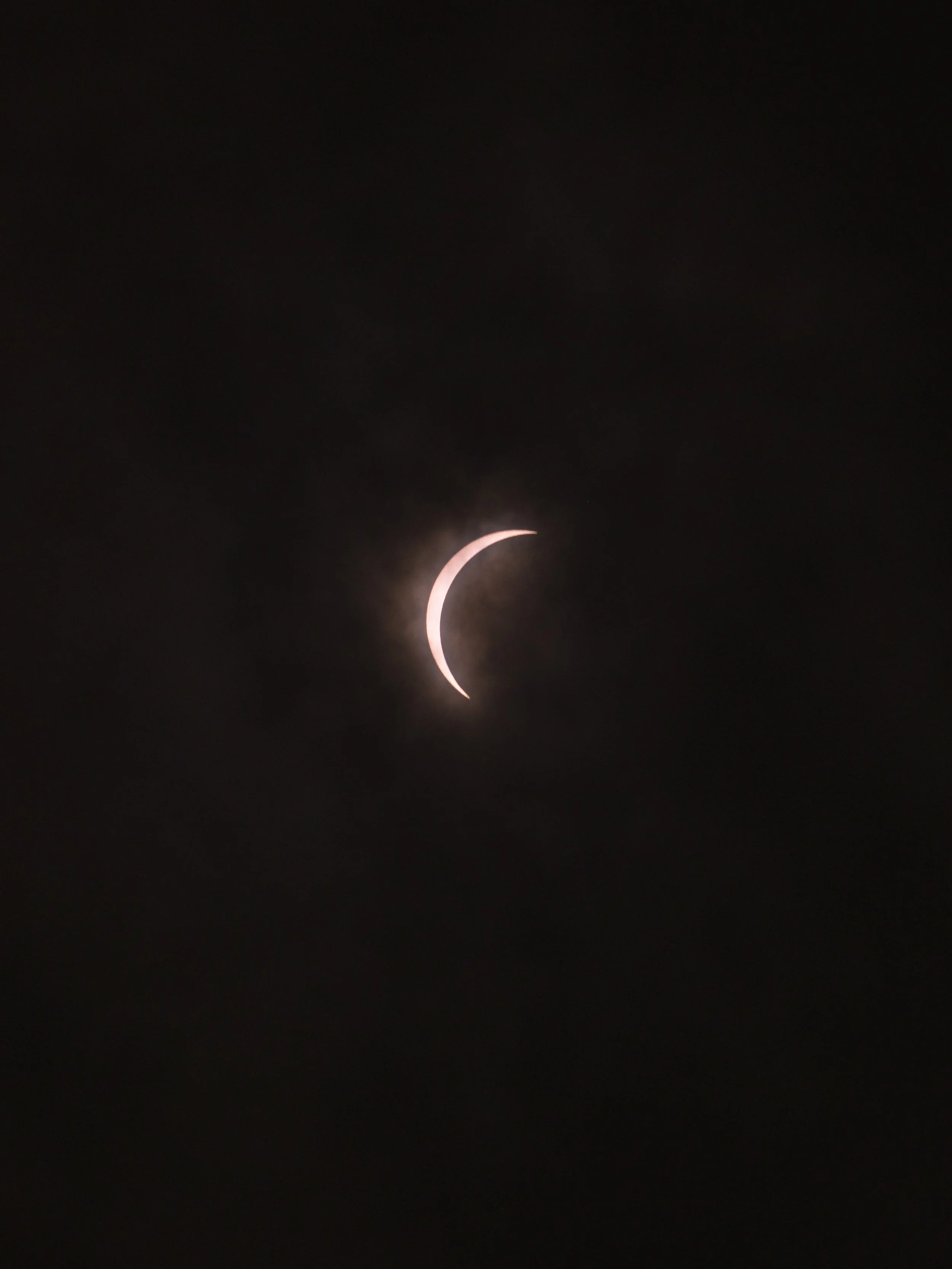
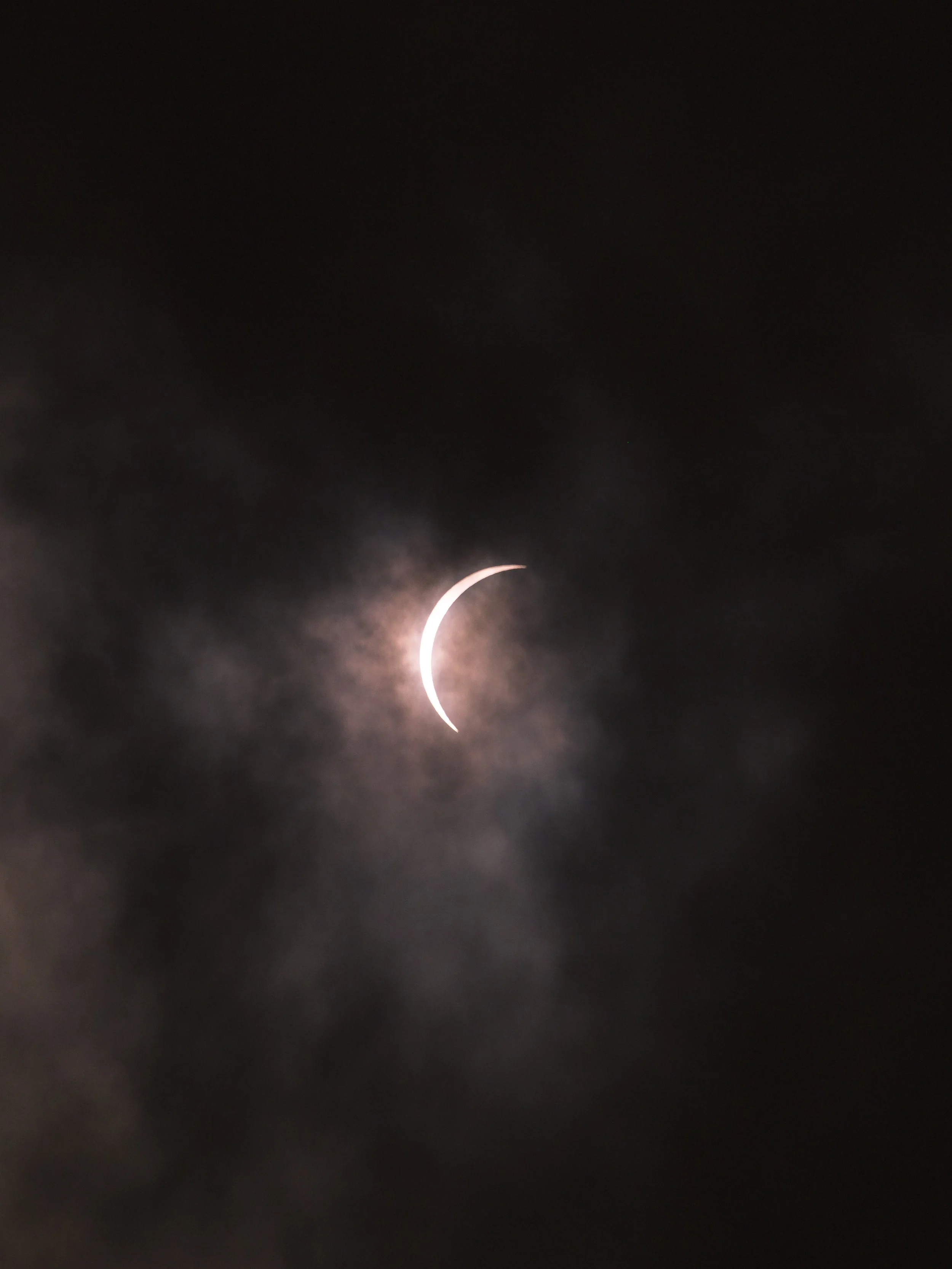
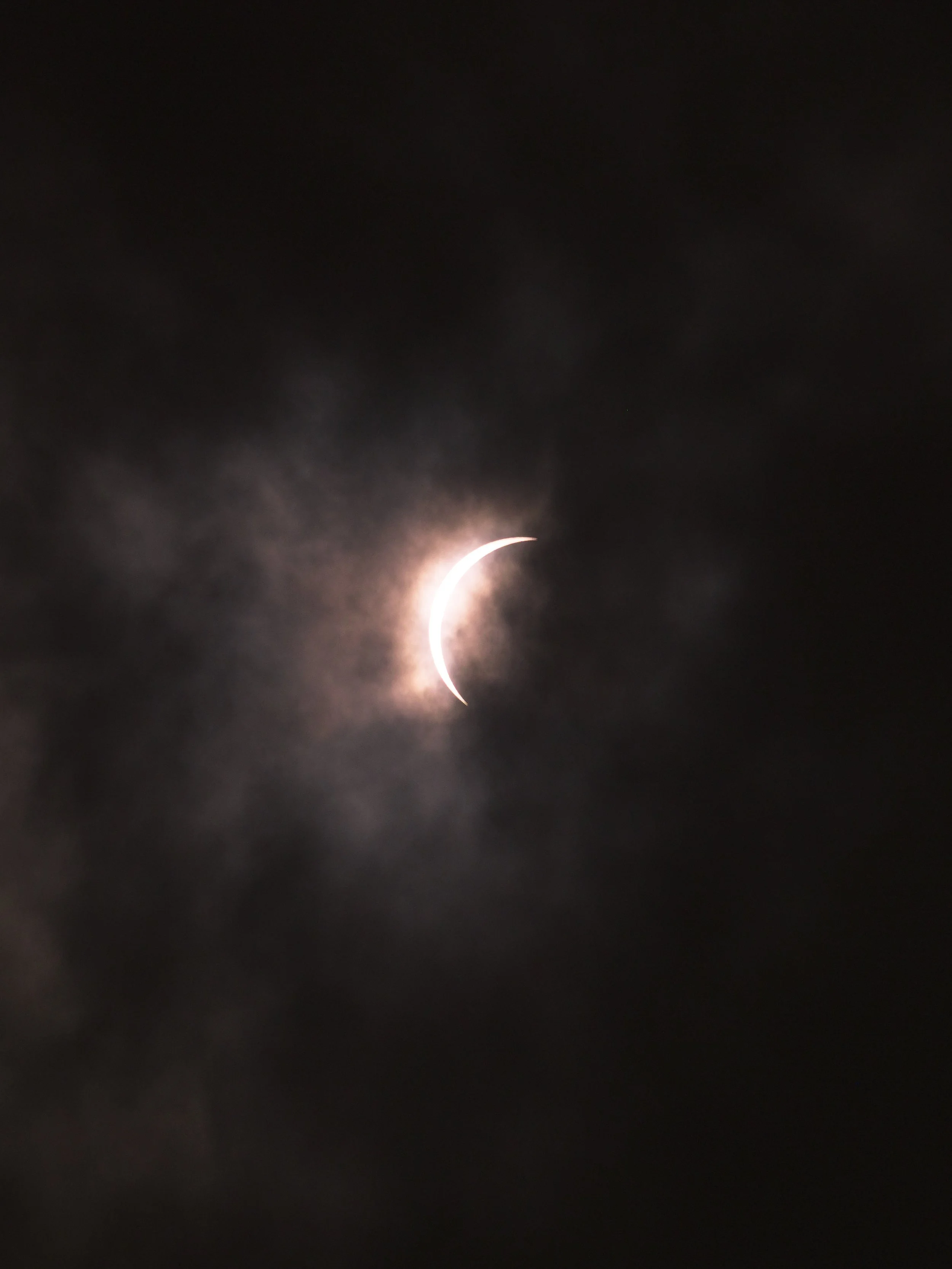
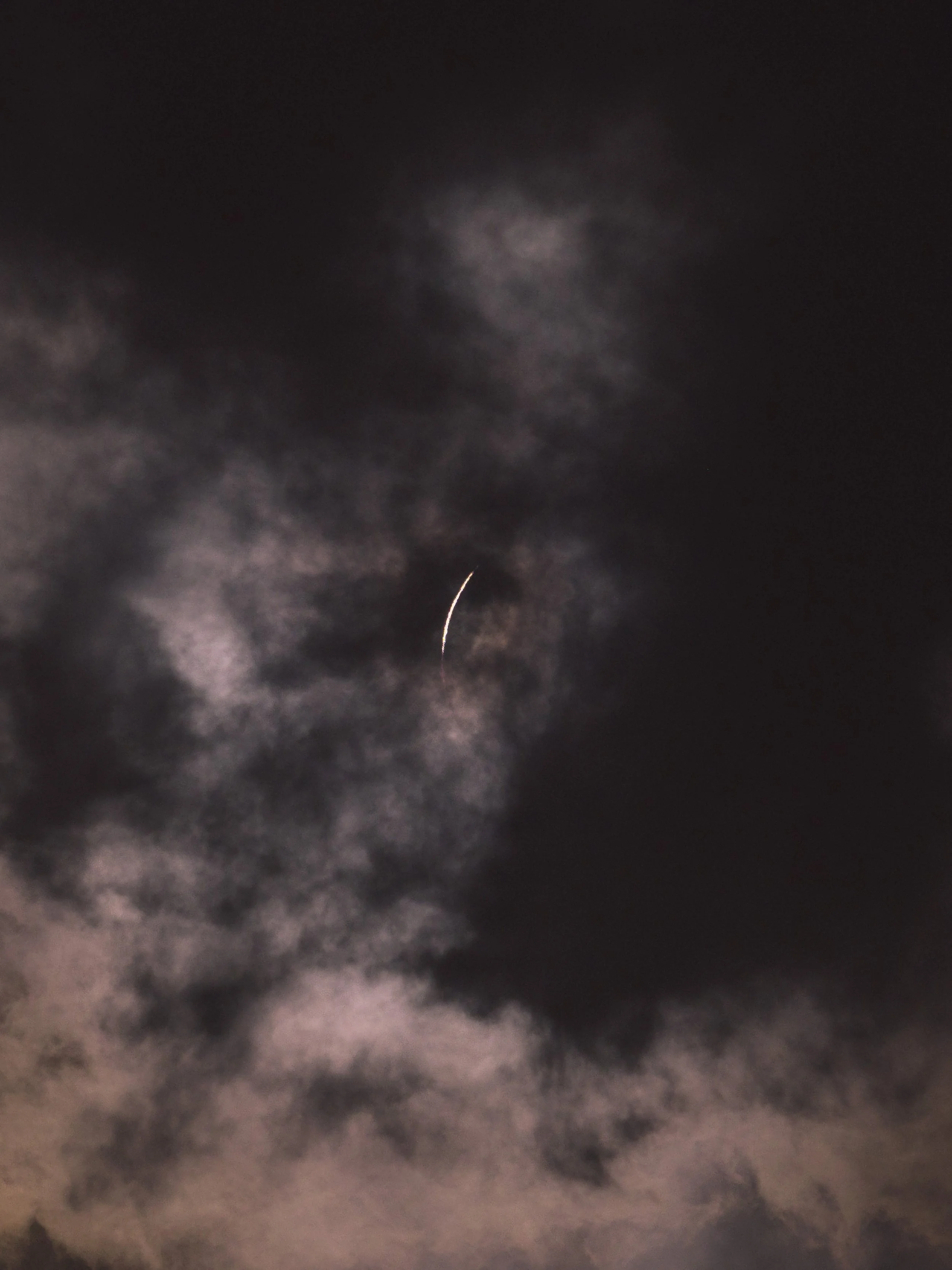
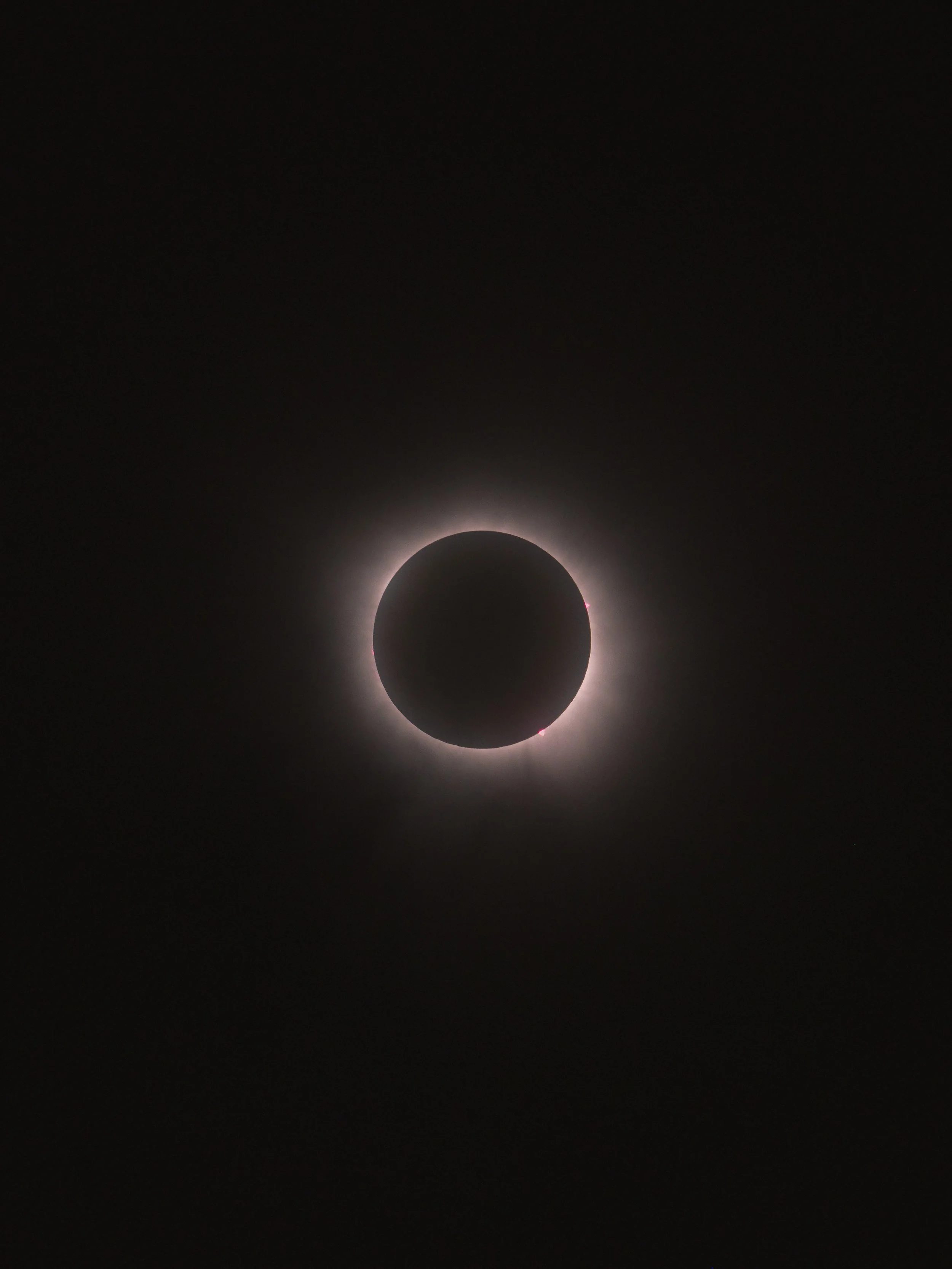
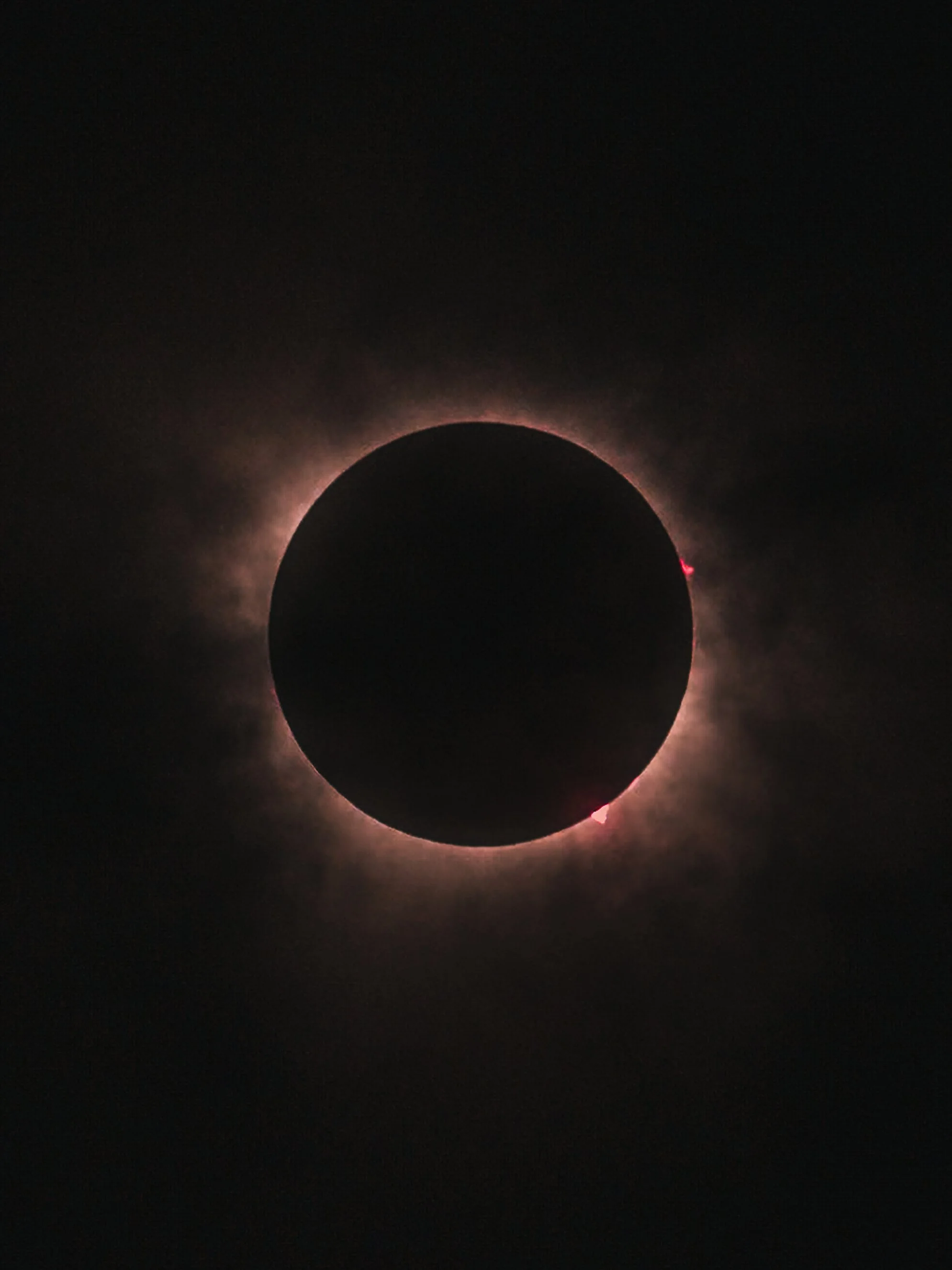
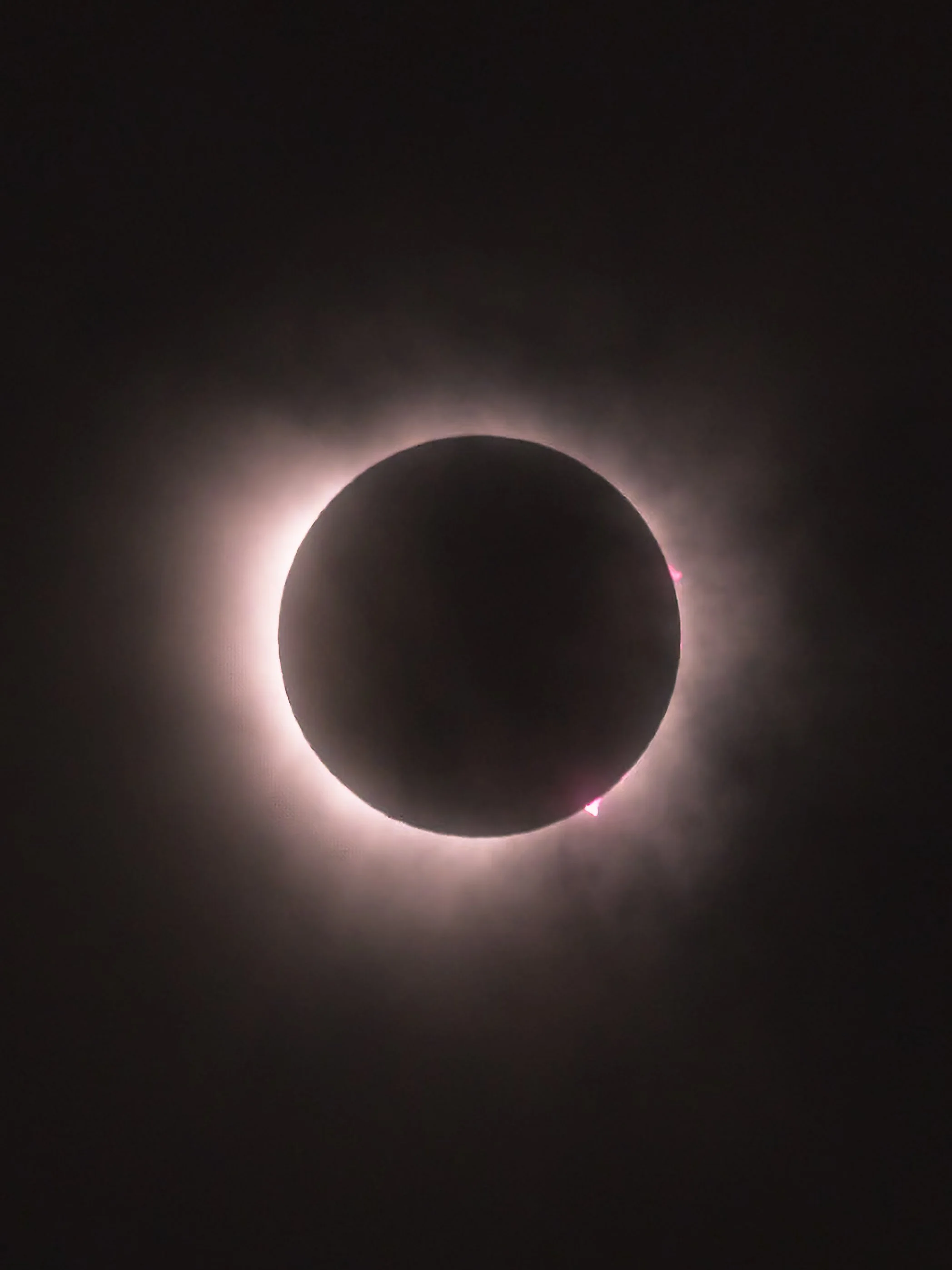
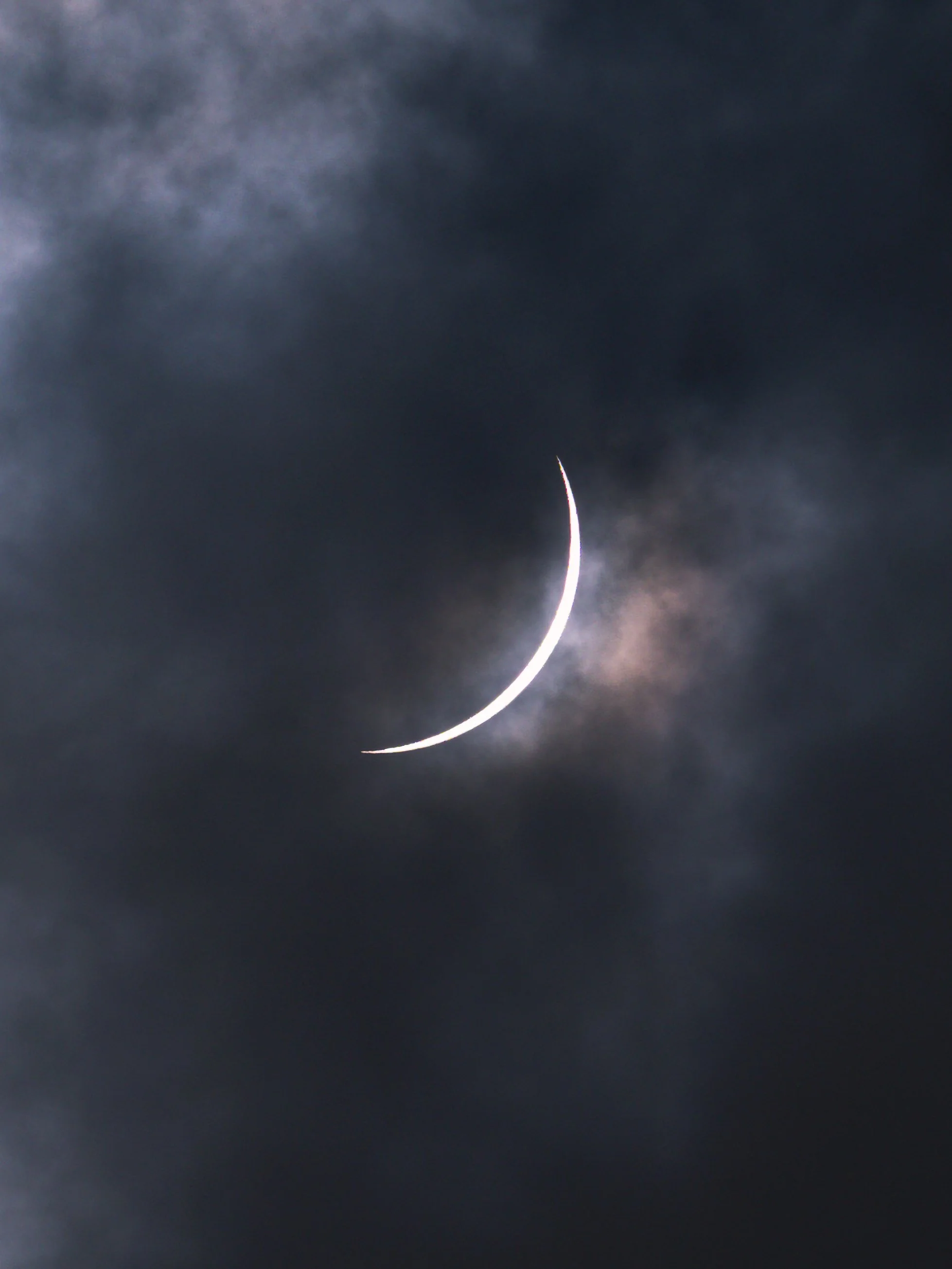
Solar Eclipse, 1:07-1:39 PM, April 8, 2024. Olympus OM-D E-M1 Mark II on the M. Zuiko 40-150mm f/2.8 PRO. Fredericksburg, TX.
The settings that actually worked:
Early on, thin cloud cover, filter stack on: 150mm, f/3.5, 1/1250 sec, ISO 2500. By 1:22pm the clouds had thickened enough that they were doing filter duty on their own, so I opened up to f/2.8 and dropped to 1/60 sec at ISO 200. Totality ran from about 1:34pm to 1:36 pm. I kept the filter stack on the entire time, I just dialed the variable ND down to its lowest setting rather than pulling the filter off completely. Totality itself is safe to view with the naked eye once the sun's photosphere is fully blocked, but I'd rather manage that risk with a dial than by timing my hands perfectly. I shot four individual frames through that window, 1/320, 1/250, 1/160, and 1/125 sec, all at f/2.8 and ISO 200. I was not running an automatic in-camera exposure bracket. I shot each frame intentionally at a different setting, so I'd end up with a spread to pick from later, since the corona spans a brightness range no single exposure can hold. By 1:39pm, third contact, I was back to f/3.5 at 1/320 sec as the sun re-emerged.
What I'd do differently:
Honestly, not much. The filter delay could have ended the whole shoot, and it very nearly did. Next time I order gear way in advance not so close to the date that if it ends up running late, my entire shoot might be shot to hell. I'd also maybe test the variable ND's full range on the sun beforehand, so I'm not guessing at how far to twist it mid-eclipse. But only if I had time. The biggest thing, though, would be to research more thoroughly where I would watch the event.
My friends and I took the eclipse in at a Walmart parking lot in Fredericksburg. If I had wanted to try and capture some interesting foreground elements to use, the parking lot of the Fredericksburg Walmart is not the place. If I had committed to going earlier and not been hung up on the fact that the clouds were going to prevent us from seeing it, I could have found a cool spot. Lesson learned: always plan and prep like if the shoot is taking place.
If you're chasing totality in Europe on August 12:
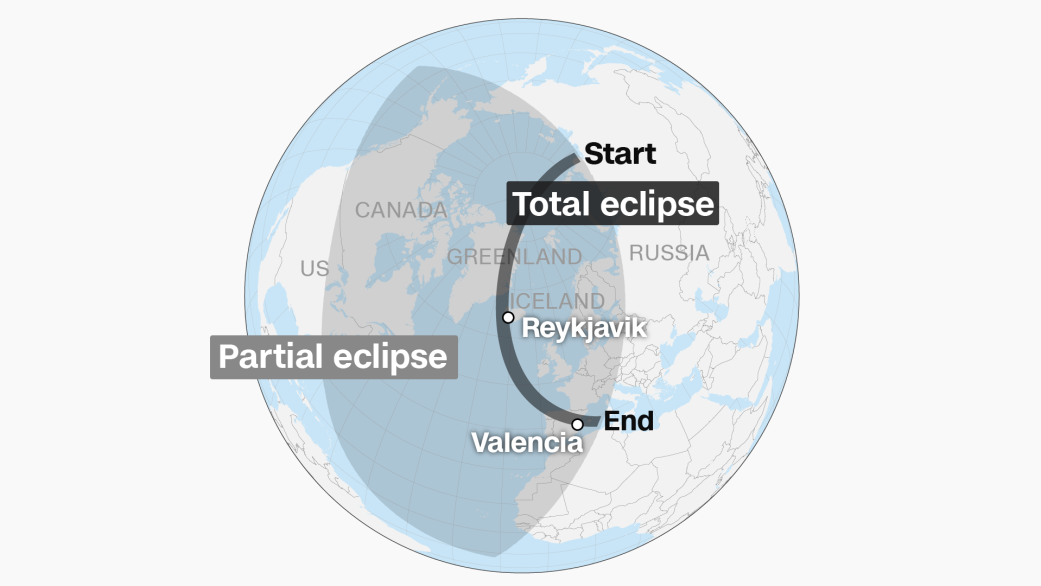
Image Courtesy of CNN.
For the exact path, NASA's official eclipse map is the one to bookmark, it lays out the full track across Greenland, Iceland, and Spain with timing tables for Reykjavik, León, Zaragoza, and Valencia. For a live, zoomable version you can search by exact address, timeanddate.com's interactive map is the better tool on the day.
The shadow reaches Iceland in the late afternoon. Duration on the ground varies a lot by location: up to 2 minutes 13 seconds at Latrabjarg Cliff in the Westfjords, around 2 minutes on the Snaefellsnes Peninsula, just over a minute in downtown Reykjavik. It then races across the Atlantic and hits northwestern Spain around 8:27pm local time, cutting through Oviedo, León, Bilbao, Santander, Burgos, Zaragoza, and Valencia before exiting over the Balearic Islands. Because Spain sits near the end of the path, the sun will be low and dramatic, close to the horizon, so think about foreground and skyline in your framing, not just a disc floating in blank sky.
Get there early, confirm your local totality time down to the minute, and do one full dry run today, filter on, camera on the sun, focus locked, so you are not solving problems in the ninety seconds you actually have.
Come along on the next one:
I'd do the five hours again tomorrow. If you're standing under that shadow this week, or you're already thinking about the next one, that's really the only advice that matters: show up, bring a backup plan, and let the sky do something you can't script. If you want the settings, the stories, and the exact gear from the next chase before anyone else, join the email list below and follow along.
About the author:
Christian Cornejo is a travel and adventure photographer, FAA Part 107 certified drone pilot, and the founder of CSW Media. He shoots worldwide with a Latin America edge, pairs a JD/MBA with a loaded camera bag, and specializes in the certified, insured aerial work most creators cannot legally get. See more of the work at chrisseesworld.com, follow the adventures at @chrisseesworld, and connect with him on LinkedIn.